
Can You Freeze Cooked Pasta? What Works at Commercial Scale
Cooked pasta freezes well when it is cooked firm, cooled fast and frozen loose. Why it turns mushy, storage times, reheating and how IQF pasta compares.
Key takeaways
- Cooked pasta freezes well if it is cooked slightly firm, cooled fast and frozen loose.
- Mushy frozen pasta usually comes from overcooking, slow freezing or freezing in a mass.
- Home-frozen pasta is best within about 6 months; Seenergy IQF pasta is rated for 18 months at 0°F.
- Reheat straight from frozen in boiling water, sauce or soup.
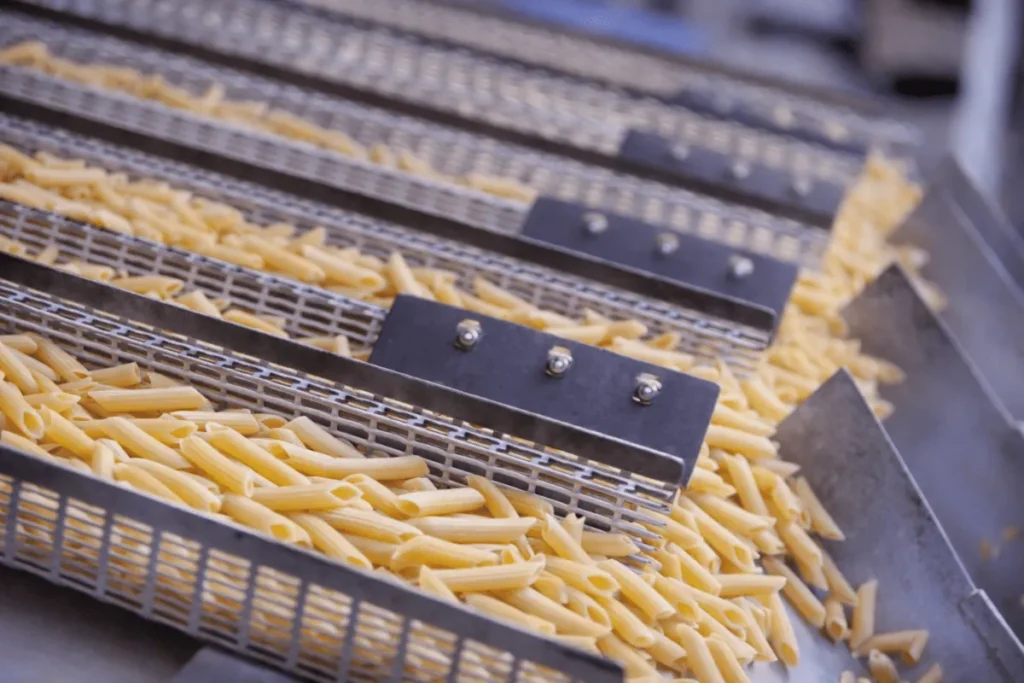
Short answer: Yes. Cooked pasta freezes well if it is cooked slightly firm, cooled quickly and frozen so the pieces don’t stick together. Home and kitchen-frozen pasta is best used within about 6 months. For food businesses, IQF pasta is cooked and frozen piece by piece in the plant, so it pours loose and skips the boil, drain and cool steps.
Why does frozen cooked pasta turn mushy?
- It was cooked too long. Pasta keeps absorbing liquid when it is reheated or sauced, so pasta that is soft before freezing ends up soft after.
- It froze slowly. USDA explains that rapid freezing prevents large ice crystals, while slow freezing lets large crystals form that damage food structure (USDA FSIS).
- It froze in a mass. Pasta packed warm into a container steams, sticks and freezes into a block.
How do you freeze cooked pasta properly?
Nebraska Extension recommends cooking pasta slightly firm, draining it, tossing it with a little oil, cooling it before bagging, and freezing single portions on a sheet before transferring them to bags (Nebraska Extension). In a commercial kitchen, cooked pasta also falls under the FDA Food Code cooling rule: from 135°F to 70°F within 2 hours and to 41°F or below within 6 hours total (Oregon Health Authority).
| Kitchen-cooked and frozen pasta | IQF pasta | |
|---|---|---|
| Cooking | Boil, drain, oil | Cooked in the plant to a set cook |
| Cooling | In-house, logged within Food Code limits | Done in the plant before freezing |
| Freezing | Sheet-freeze or bag; often clumps | Piece by piece; stays loose |
| Storage | Best within about 6 months (Nebraska Extension) | 18 months at 0°F (Seenergy specs) |
| Consistency | Varies by batch and crew | Same cook spec in every bag |
How should frozen pasta be reheated?
- In boiling water: usually under 5 minutes, according to Nebraska Extension; thin shapes heat faster.
- In sauce, a skillet or combi oven straight from frozen, until steaming hot.
- In soups and stews, added directly so the liquid thaws and heats it.
- For pasta salads, thaw under refrigeration and keep at 41°F or below.
What cook level should you ask for in IQF pasta?
Ask for a firmer cook if the pasta will be sauced, baked or held hot, and a standard cook for cold salads. Seenergy’s R&D team can adjust the cook per item. See our IQF pasta buyer’s guide and all IQF pasta shapes.
Frequently asked questions
Can you freeze cooked pasta?
Yes. Cook it slightly firm, cool it quickly and freeze it in portions or loose pieces so it doesn’t clump. Home-frozen pasta is best used within about 6 months.
Why is my frozen pasta mushy?
Usually because it was cooked too soft before freezing, froze slowly, or froze in a mass. Pasta keeps absorbing liquid when reheated.
How long does frozen cooked pasta last?
Nebraska Extension suggests using home-frozen pasta within about 6 months. Seenergy’s IQF pasta is rated for 18 months at 0°F.
Do you have to thaw frozen pasta before cooking?
No. Add it straight from frozen to boiling water, sauce or soup and heat until steaming hot.
Sources: Nebraska Extension, Freezing Rice and Pasta; USDA FSIS, Freezing and Food Safety; Oregon Health Authority, Cooling Foods (Food Code 3-501.14).
Next step
See how it runs in your process.
Request a sample of fully cooked IQF beans, grains, rice or pasta and test it on your own line or menu.