
What Is IQF Freezing? A Practical Guide for Food Buyers
Freezing keeps food from spoiling. How you freeze it decides if the pieces pour out smooth, cook right, and taste close to fresh. IQF is the line between premium frozen food and the junk that turns to mush. You have probably seen IQF on a bag and wondered what makes it different. Or what happens…
Key takeaways
- IQF means individually quick frozen: each piece freezes separately and fast.
- Fast freezing helps protect texture, and loose pieces portion easily.
- It differs from flash, blast and block freezing in how and how fast product freezes.
Short answer: IQF stands for individually quick frozen. Each bean, grain or piece of pasta is frozen separately and fast, so it stays free-flowing, keeps its texture and can be portioned straight from the bag. For food manufacturers and kitchens, that means less prep, exact portions and consistent results batch after batch.
IQF is one of the most common terms on frozen ingredient specs, but it is often confused with flash freezing, blast freezing or block freezing. This guide explains what IQF actually means, how the process works, and why it matters when you buy fully cooked beans, lentils, grains, rice and pasta.
What IQF means
IQF stands for individually quick frozen. Instead of freezing a product as one solid mass, each piece is frozen on its own, quickly, while it is kept moving. The result is a frozen product that pours like a dry ingredient: you can take out exactly the amount you need and put the rest back in the freezer.
On a pack or spec sheet, “IQF” tells you two things: the pieces are separate, and the product was frozen fast enough to protect its texture.
How the IQF process works
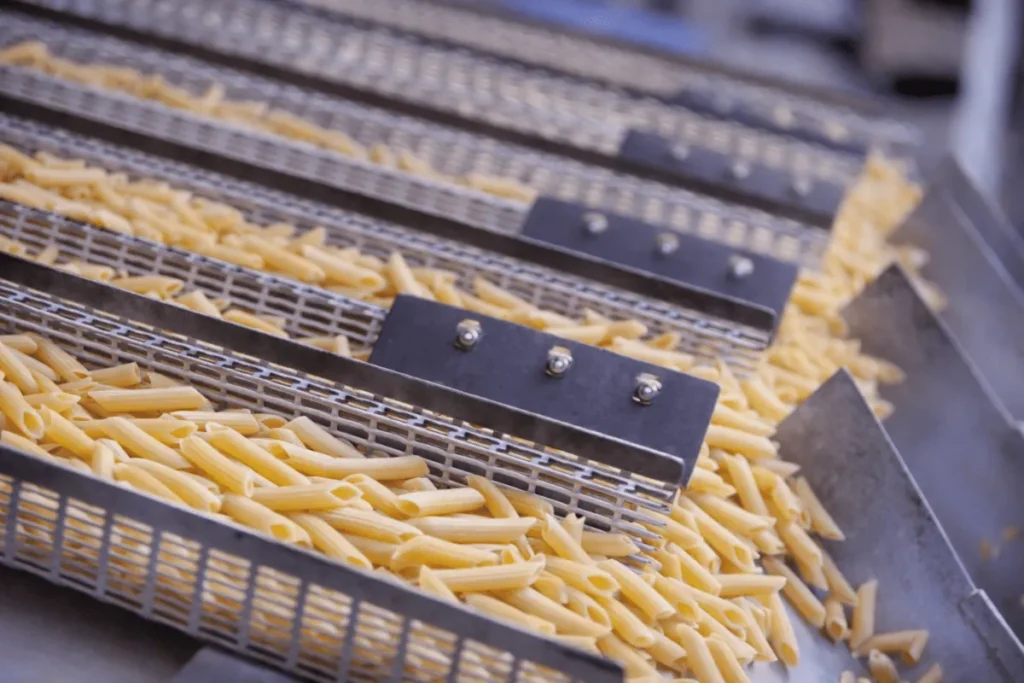
For a fully cooked ingredient such as Seenergy’s IQF beans, grains, rice and pasta, the process runs in a straight line:
- Cook: the raw beans, grains, rice or pasta are cooked to a set texture.
- Cool: the cooked product is chilled quickly to stop the cooking and hold the texture.
- Freeze individually: the pieces travel through a freezer on a moving bed of very cold air, so each piece freezes separately instead of sticking to its neighbors.
- Pack and store: the free-flowing product is packed into retail bags, foodservice cases, bulk cases or totes and kept frozen.
Because each piece is surrounded by cold air, it freezes in minutes rather than hours. That speed is what protects the product.
Why fast, individual freezing protects quality
All food contains water. When food freezes slowly, that water forms large ice crystals that damage the structure of the food. On thawing, the damaged cells release moisture, and the product turns soft or mushy.
Fast freezing forms many small ice crystals instead. They cause far less damage, so a bean stays whole, rice stays separate and pasta keeps its bite after reheating. Freezing each piece individually adds a second benefit: nothing clumps, so there is no block to break apart and no waste from thawing more than you need.
IQF vs. flash, blast and block freezing
IQF vs. flash freezing
“Flash freezing” is a general term for freezing food very quickly. IQF is a specific type of fast freezing where the pieces are also kept separate. All IQF is fast freezing; not all fast freezing is IQF.
IQF vs. blast freezing
Blast freezing uses very cold, high-velocity air, often for cases, trays or racks of product. It is fast, but the product is usually frozen together in a container. IQF freezes the pieces themselves, one by one.
IQF vs. block freezing
Block freezing packs product into a mold or case and freezes it as a solid mass. It is economical for bulk shipping, but the whole block has to be thawed before use, which takes time and often creates waste. For a deeper comparison, see IQF vs. block frozen.
What IQF means for your kitchen or production line
For buyers of cooked beans, grains, rice and pasta, the practical benefits are what matter:
- No soaking, boiling or draining: the product is already cooked. Use it from frozen or after a short heat-through.
- Exact portions: weigh out what a recipe needs; the rest stays frozen.
- Consistent results: the same texture and yield from the first bag to the last, across shifts and locations.
- Less waste: no partially used cans or thawed blocks to throw away.
- Simple labels: most plain products are just the cooked ingredient and water, with no preservatives.
- Long frozen shelf life: kept at 0 °F (−18 °C) or colder, the product holds its quality for months.
Where IQF cooked ingredients are used
- Food manufacturers: prepared meals, soups, burritos, bowls and salads, where a consistent spec keeps every run the same.
- Foodservice: restaurant chains, commissaries and institutions that need speed and consistency with less skilled prep labor.
- Retail and private label: frozen bags of ready-to-eat beans, grains and blends under your own brand.
How to choose an IQF ingredient supplier
When you compare suppliers, look beyond price per pound:
- Food safety: GFSI-certified, FDA-registered facilities with clear documentation for your QA team.
- Spec consistency: texture, moisture and piece integrity that match your process every time.
- Pack options: formats that fit your line, from retail bags to bulk totes.
- Range and customization: the beans, grains, rice and pasta you need, and the ability to build custom blends.
- Samples and trial support: the chance to run the product in your own process before you commit.
Seenergy Foods has made fully cooked IQF ingredients since 1994. Browse our products or request a sample to test them in your process.
FAQs
What does IQF stand for on food packaging?
IQF stands for individually quick frozen. Each piece is frozen separately, so the product pours freely from the bag and you can portion only what you need.
What is the main advantage of IQF?
Quality after thawing or cooking. Texture, shape and moisture hold up better than with slow or block freezing, and separate pieces make exact portioning easy, which cuts waste.
Is IQF the same as flash freezing?
Not exactly. Flash freezing means freezing food very quickly. IQF is a type of fast freezing in which the pieces are also kept separate, so they don’t freeze together.
Does IQF food need preservatives?
No. Rapid freezing is what preserves the food, so IQF itself needs no preservatives or additives. Most Seenergy products are simply the cooked bean, grain, rice or pasta and water.
Why does IQF food not clump together?
Each piece freezes on its own before pieces can bond to each other. Keeping the product at 0 °F (−18 °C) or colder, without thawing and refreezing, keeps it free-flowing.
Do I need to thaw IQF cooked ingredients before use?
Usually not. Fully cooked IQF beans, grains, rice and pasta can go straight from frozen into a hot dish, or be thawed under refrigeration for cold applications such as salads.
Is IQF food as good as fresh?
For cooked ingredients like beans, grains, rice and pasta, IQF locks in the texture and quality at the moment of freezing. Stored frozen and handled properly, the product performs the same from the first bag to the last.
Related reading
Next step
See how it runs in your process.
Request a sample of fully cooked IQF beans, grains, rice or pasta and test it on your own line or menu.