
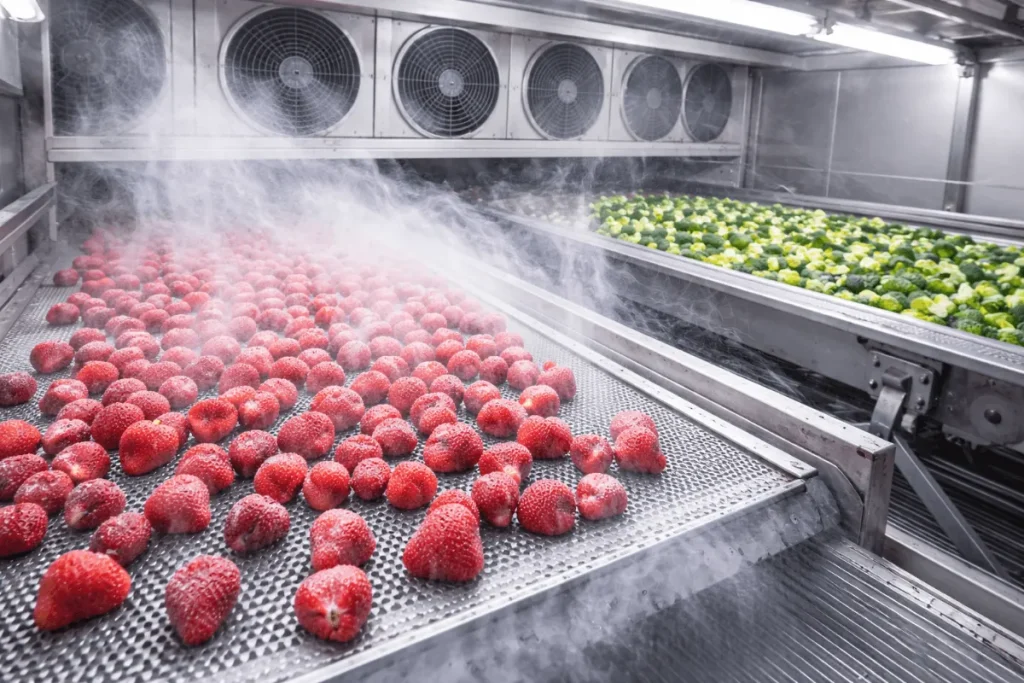
The Global IQF Market is poised to grow 6.2% CAGR by 2033.
Frozen food quality is easy to spot when something goes wrong. Mushy vegetables. Clumped shrimp. Inconsistent portions.
And that usually points to one thing. A freezing method that did not protect the product.
This guide explains what IQF means in food and you will see how the process works.
What is IQF Meaning?
Still wondering who is IQF meaning? It is an acronym for Individually Quick Frozen. That phrase answers the direct question of what does IQF stand for. But the operational value comes from how IQF behaves after freezing, not from the acronym itself.
When food is individually quick frozen, each piece freezes on its own instead of freezing into a solid mass. That separation allows kitchens and production teams to portion exactly what they need without thawing an entire case. And that is the whole point.
For bulk buyers, the IQF meaning connects directly to cost control. Less breakage during handling. Less moisture loss during cooking. More usable product per shipment. Over time, those small gains add up across thousands of portions.
For food manufacturers, IQF supports product consistency. Ingredient behavior stays predictable across runs. Cook times stay stable. Visual quality remains intact. So when teams ask what does IQF mean in food, the answer often comes down to reliability.
How IQF Works (Step by Step, No Jargon)
IQF works because it solves specific freezing problems in a specific order. Each step exists for a reason, and skipping any one of them reduces the benefit.
Step 1: Food Is Separated Into Individual Pieces
The process begins with separation. Food moves across belts, screens, or conveyors where pieces are spread out evenly. Nothing overlaps. Nothing piles up.
That physical spacing matters because contact creates freezing bonds. Remove contact, and individual freezing becomes possible.
Step 2: Rapid Freezing Happens in Minutes
Once separated, the food enters a zone of extreme cold. Very cold air or cryogenic gas drops the temperature quickly. Often in just minutes.
That speed defines the IQF meaning. Fast temperature drop prevents moisture from migrating within the product.
Step 3: Fast Freezing Reduces Large Ice Crystals
Slow freezing allows water to form large ice crystals. Those crystals rupture cell walls and damage the structure. IQF prevents that.
Smaller crystals protect texture. Vegetables keep biting. Proteins hold moisture. And cooked results stay consistent.
Mechanical vs Cryogenic IQF
Mechanical IQF uses powerful cold air in fluidized beds. It works well for vegetables, grains, and diced items. Cryogenic IQF uses liquid nitrogen or carbon dioxide for even faster freezing.
Both approaches deliver the same outcome. Separate pieces. Fast freeze. Protected quality.
IQF vs Regular Frozen (Block Freezing)
To fully understand the IQF meaning, it helps to compare it to block freezing. The difference shows up immediately during handling.
What Block Freezing Is and Why Clumps Happen
Block freezing occurs when food freezes slowly in bulk packaging. Items sit together while temperatures gradually drop. Moisture moves. Ice crystals grow. Pieces freeze together.
Once frozen, the product becomes a solid mass. Breaking it apart requires force or thawing. And both create problems.
IQF Differences You Can Actually Feel
IQF products pour freely straight from frozen storage. Portions stay accurate without weighing or guessing. Cook times remain consistent from batch to batch.
Block frozen products slow operations. They require extra labor and increase the risk of waste.
When IQF Does Not Matter Much
IQF matters less when texture is irrelevant. Products that will be fully ground or pureed may not benefit as much.
Then again, for most visible ingredients, IQF delivers measurable value.
What Foods Are Commonly IQF?
IQF is used where separation, texture, and portion control matter most.
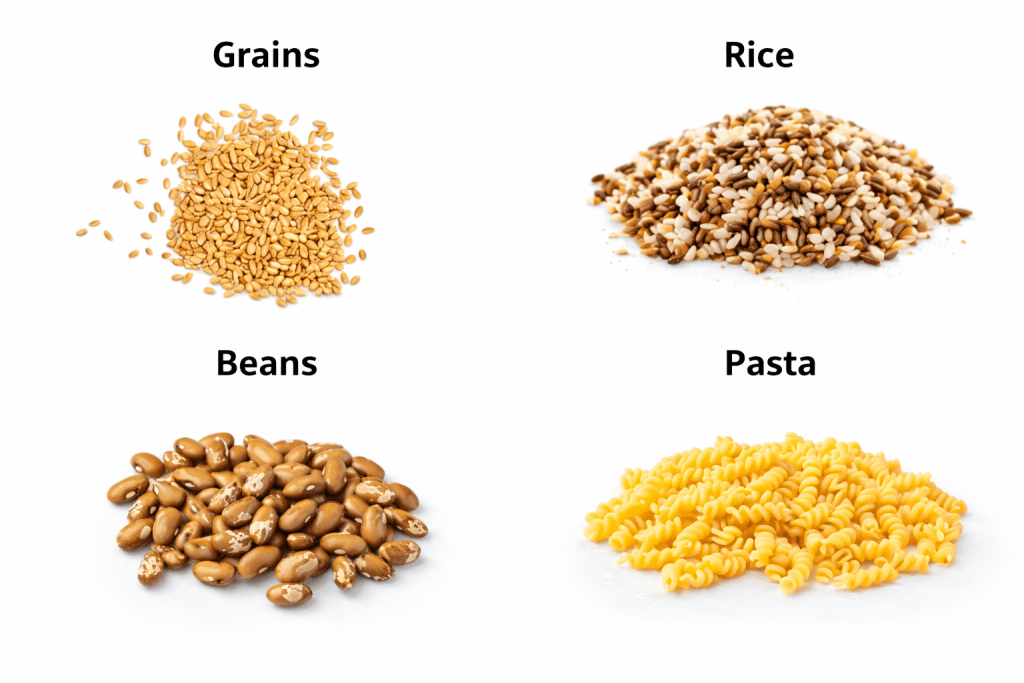
Fruits and Vegetables
Berries, peas, corn, and diced vegetables are ideal for IQF. Each piece freezes cleanly and stays free-flowing.
That helps kitchens portion quickly and manufacturers maintain consistent formulations across production runs.
Seafood
Shrimp, scallops, and fillets benefit from IQF because moisture retention protects yield. Counts remain accurate. Shape remains intact.
For seafood buyers, the IQF meaning often equals better cost predictability.
Meat and Poultry
Portioned proteins freeze well using IQF. Operators can pull exact quantities from frozen storage without thawing full cases.
That speeds prep and reduces overcooking during service.
Grains and Pasta
Cooked grains and pasta use IQF to prevent clumping in ready meals. Portions stay loose and reheat evenly.
That consistency supports scale without sacrificing texture.
Does IQF Mean Healthier or No Additives?
This is a common misconception. And it deserves a clear answer.
What IQF Guarantees
IQF guarantees a freezing method. Separate pieces. Rapid freezing. Reduced structural damage. It does not change nutritional content by default.
What IQF Does Not Guarantee
IQF does not mean organic. It does not mean no sodium, and it does not mean additive-free.
Those claims depend on sourcing and formulation, not freezing technique.
What to Check on the Label
Always review ingredient lists. Plain IQF vegetables differ from seasoned blends. Sauces and sodium levels vary widely. The IQF meaning explains texture. Labels explain everything else.
How to Use IQF Foods Without Ruining Texture
IQF improves flexibility, but handling still matters.
Best Practices
Cook from frozen when possible, especially vegetables and seafood. Direct heat protects the structure and reduces moisture loss.
Avoid thawing and refreezing. Temperature abuse damages even the best IQF products.
Storage Tips
Keep the packaging sealed tightly. Limit air exposure. Rotate inventory consistently.
Handled correctly, IQF performs exactly as intended.
Conclusion
The IQF meaning comes down to speed, separation, and control. Freeze fast. Keep pieces separate. Protect quality.
For foodservice teams, manufacturers, and procurement professionals, understanding what does IQF mean in food leads to better yield, faster prep, and consistent results.
Explore premium IQF ingredients and sourcing expertise at Seenergy Foods. Better decisions start with better freezing knowledge.
FAQs
What does IQF mean in food?
IQF means Individually Quick Frozen. It describes food that is frozen rapidly as separate pieces rather than as a solid block.
What does IQF stand for on food packaging?
IQF stands for Individually Quick Frozen. It indicates that the product was frozen piece by piece to preserve texture and allow easy portioning.
Why does the IQF meaning matter for food quality?
IQF matters because fast freezing creates smaller ice crystals. Smaller crystals cause less cellular damage, helping food retain texture, moisture, and appearance after cooking.
Does IQF mean the food is fresher?
IQF does not mean fresh, but it often preserves quality closer to fresh than slow freezing. Texture, color, and moisture retention are typically better.
Does IQF help with portion control?
Yes. Because pieces remain separate, operators can use exactly the amount needed without thawing or breaking apart frozen blocks.